Role: Lead Designer
Focus: Workflow design, SaaS experience, Collaboration
Work / Internal SEO Management Tool
Overview
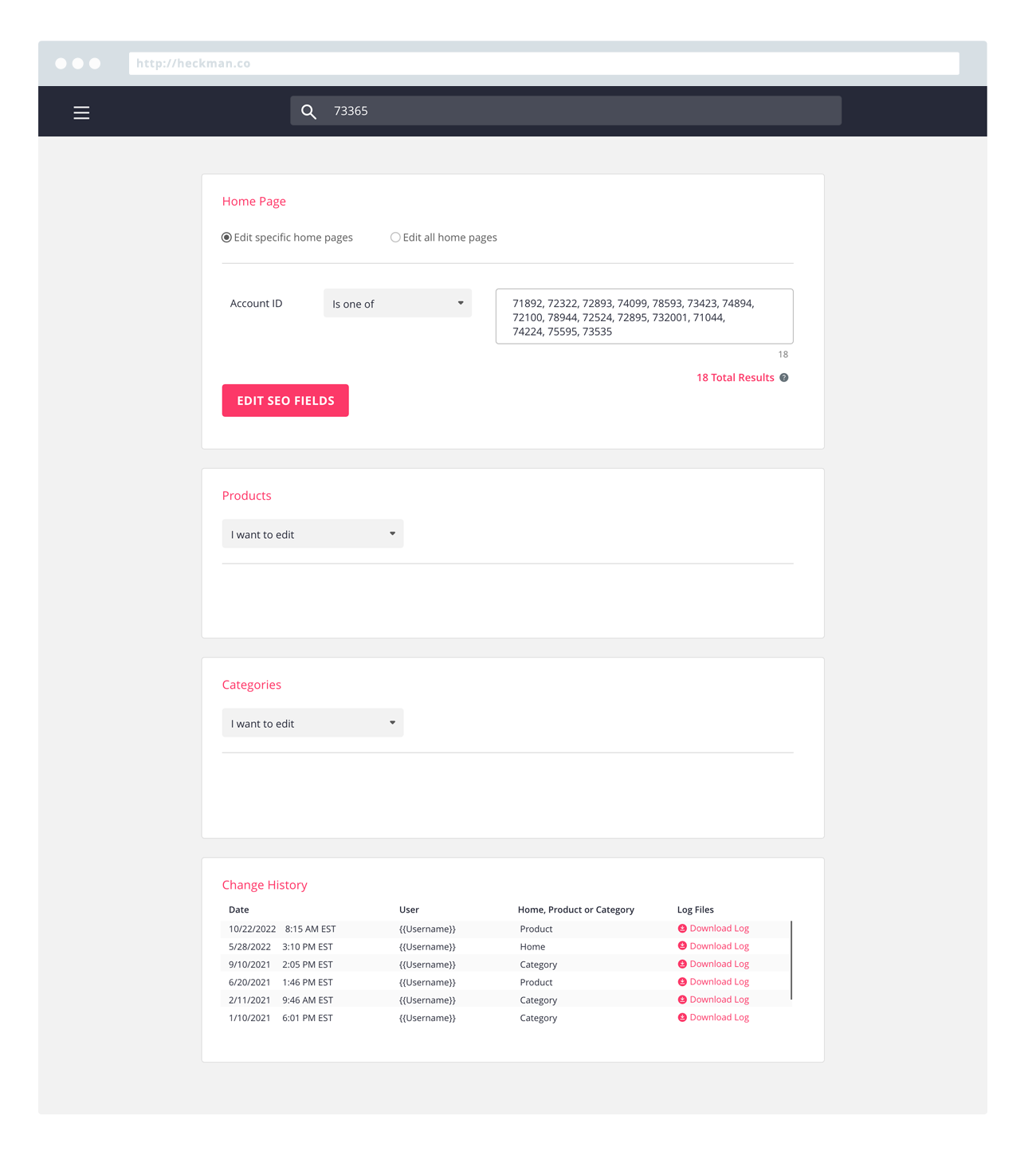
I designed a new internal tool that introduced SEO management capabilities across a nationwide network of florist storefronts. Before this project, there was no way to add or edit SEO metadata anywhere in the system. Every site in the network used the same static metadata, which kept visibility low and made optimization impossible at any scale.
The goal was to design and deliver a first-of-its-kind interface for managing SEO content within the existing platform. It needed to be powerful enough for large-scale updates, simple enough for non-technical editors to use with confidence, and finished in under two months.
Context and Goals
This project introduced functionality that had never existed in the product. There was no backend logic, no interface, and no process for handling SEO data. Every storefront in the network was invisible to search in the same way, and no one on the team had the tools to fix it.
The goal was to design a system that allowed SEO customization at both the individual storefront and network-wide levels. It had to balance precision with simplicity, giving teams the ability to make targeted or bulk updates without needing developer support.
Research and Discovery
Because there was no existing tool to reference internally, research focused on understanding what an effective SEO management system should actually do. I worked closely with SEO specialists to define core requirements and map the relationships between metadata, templates, and storefront content.
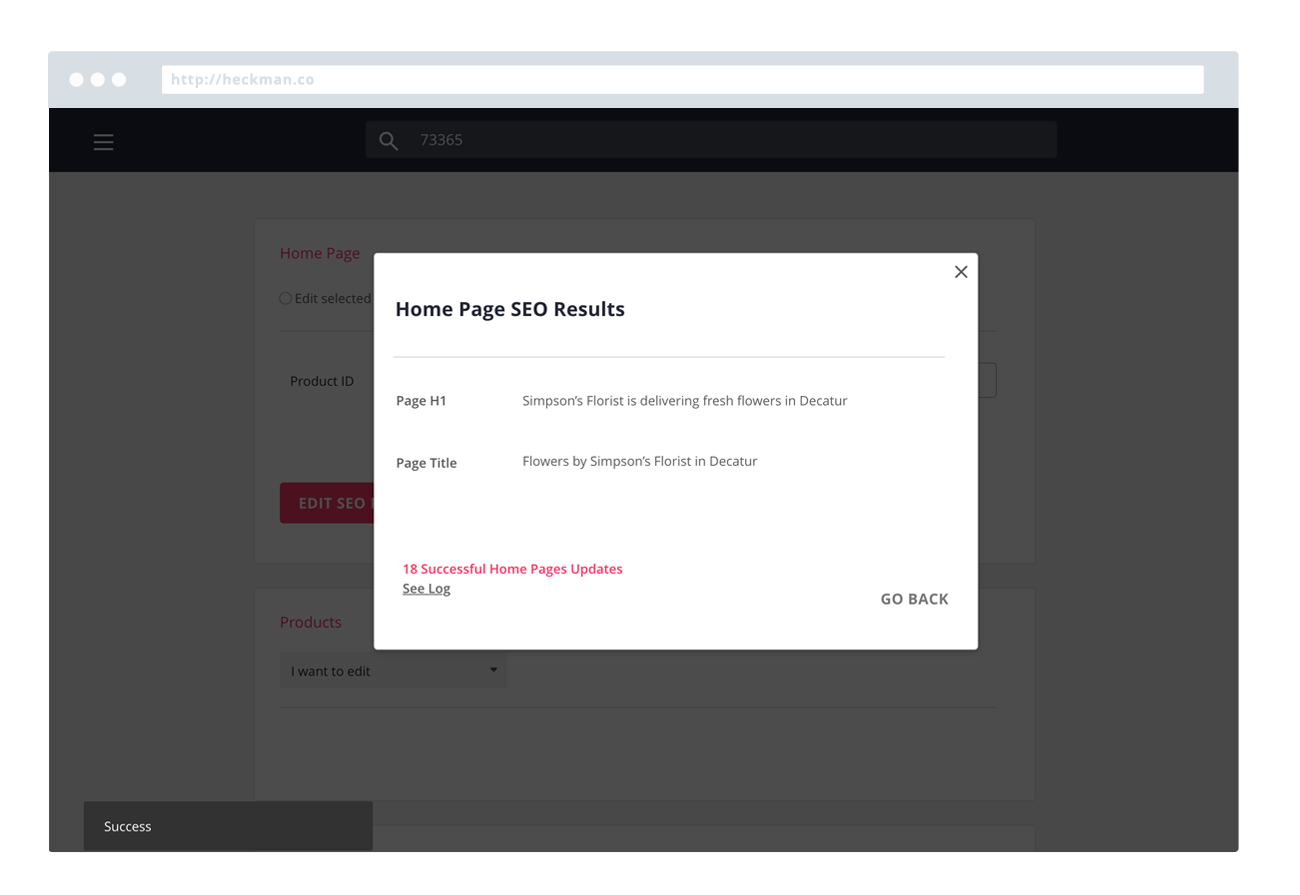
To ground the approach, I conducted a competitive analysis of leading CMS and SEO tools to identify what worked. That analysis pointed to three things that mattered most: inline validation, structured field relationships, and clear preview states. Those became the foundation the design was built around.
Design Approach
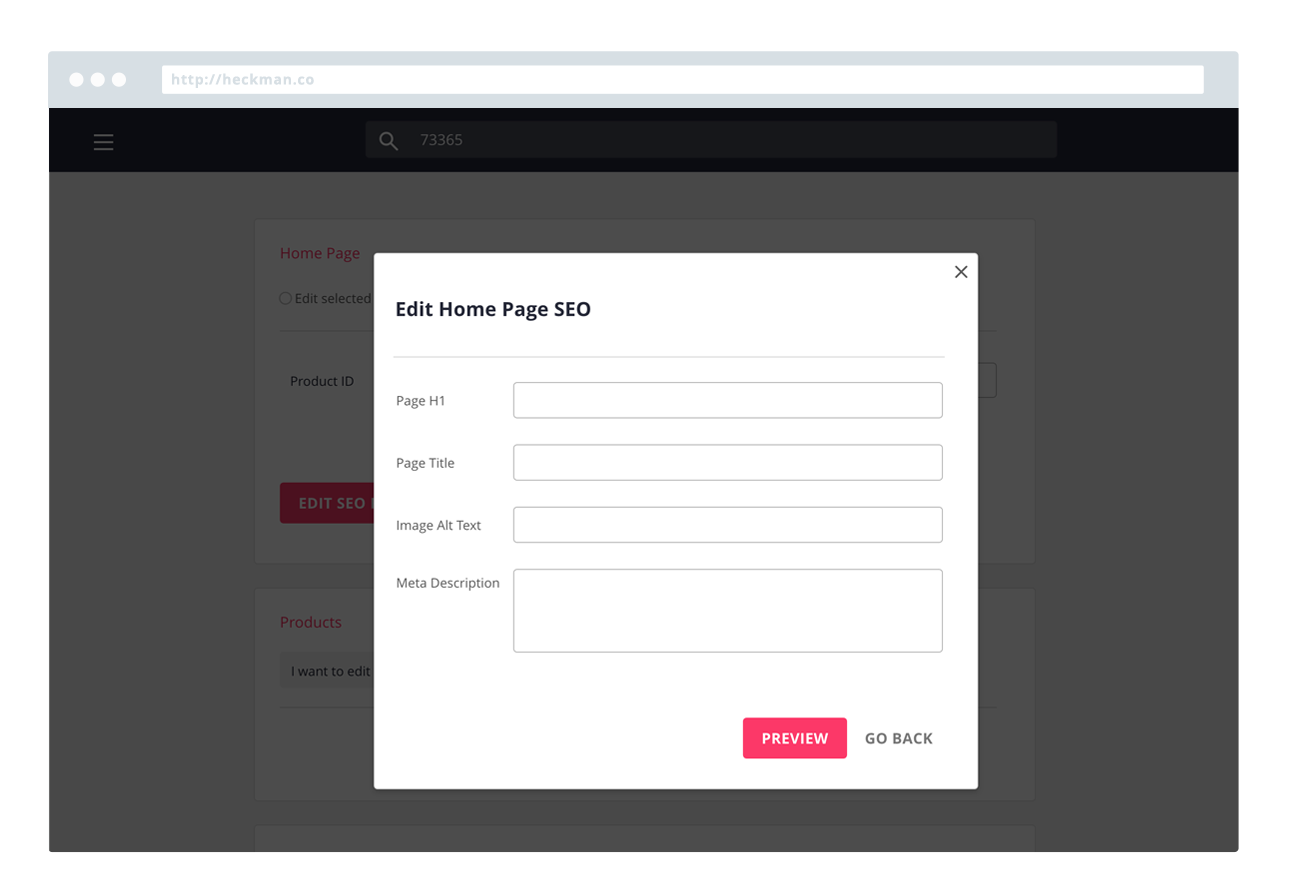
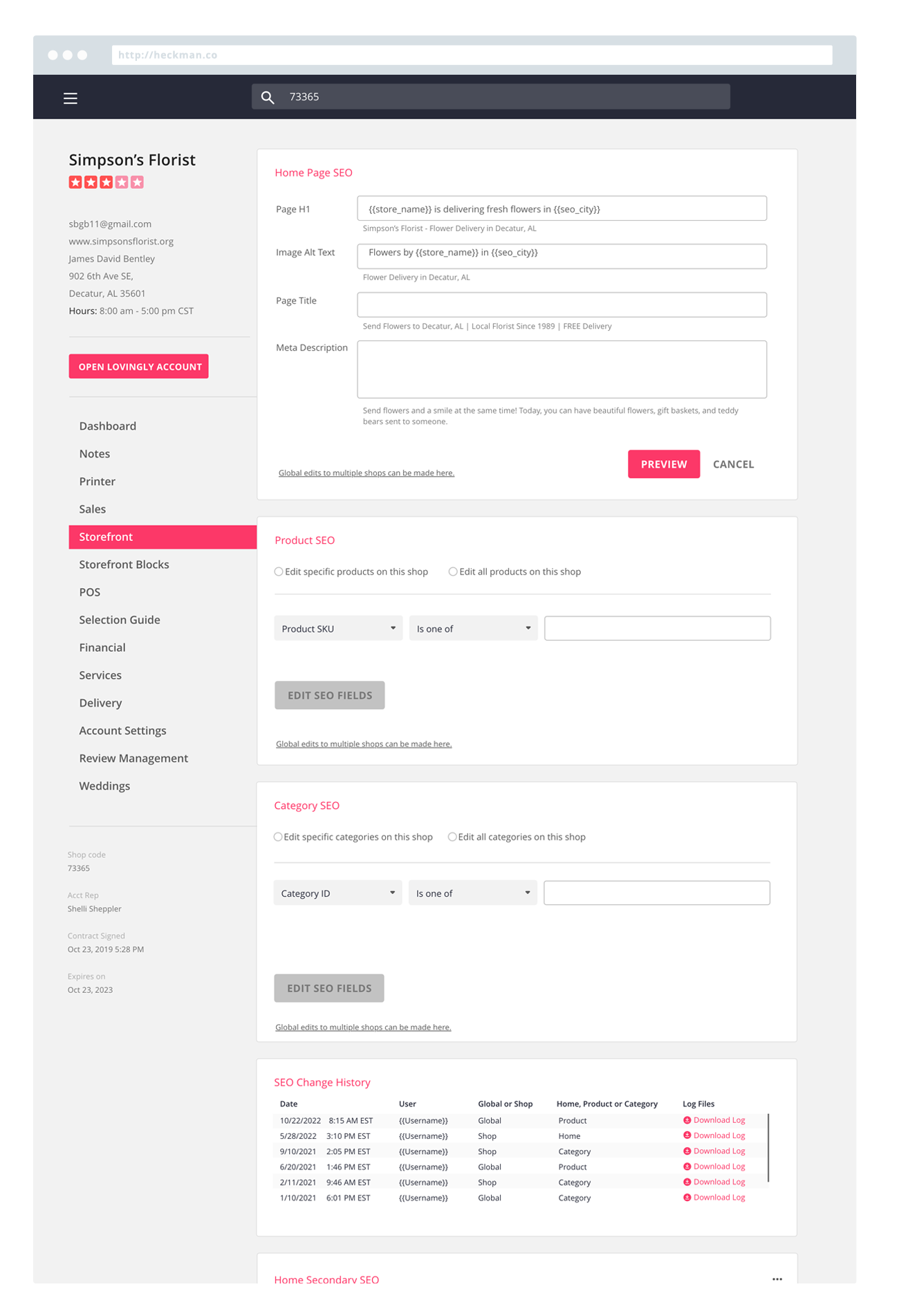
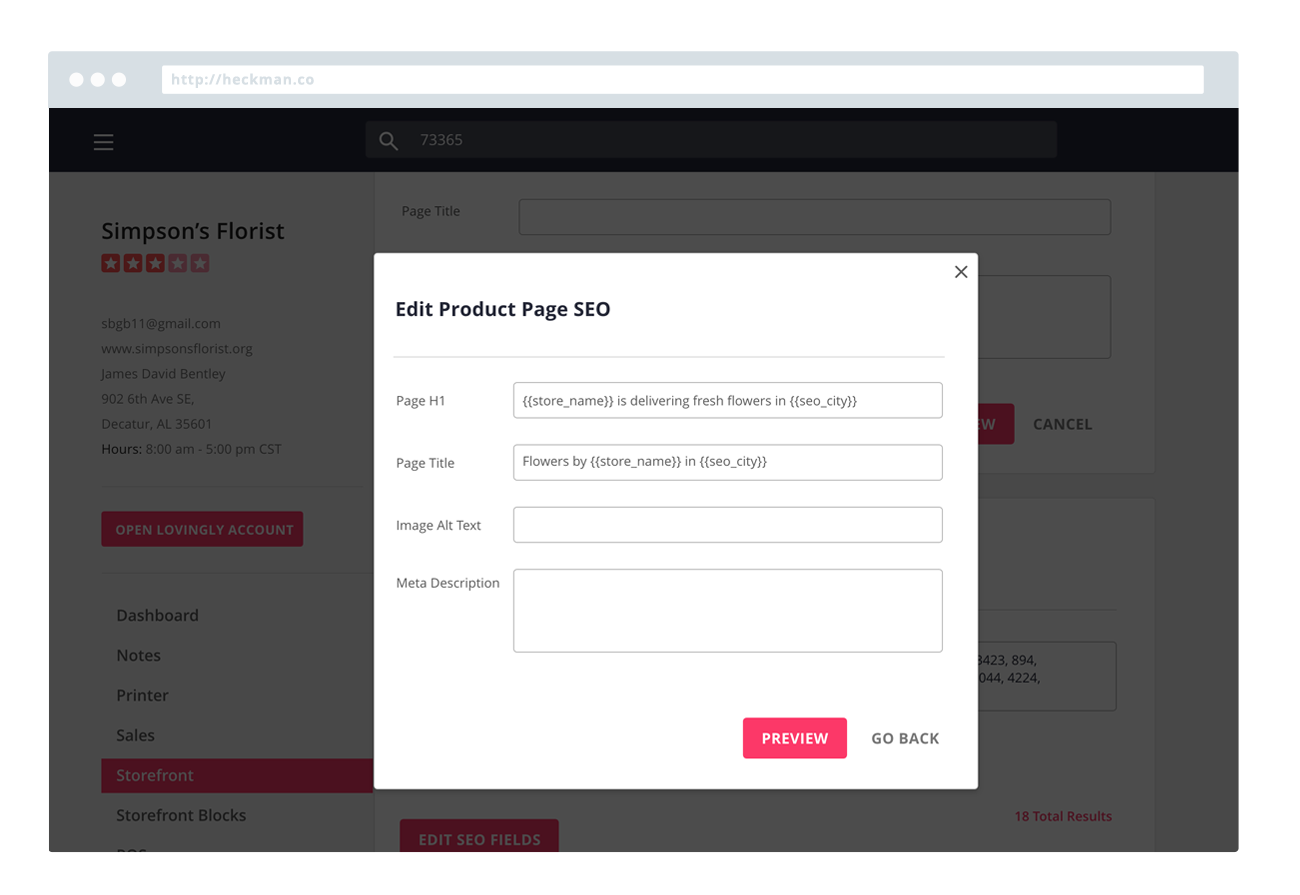
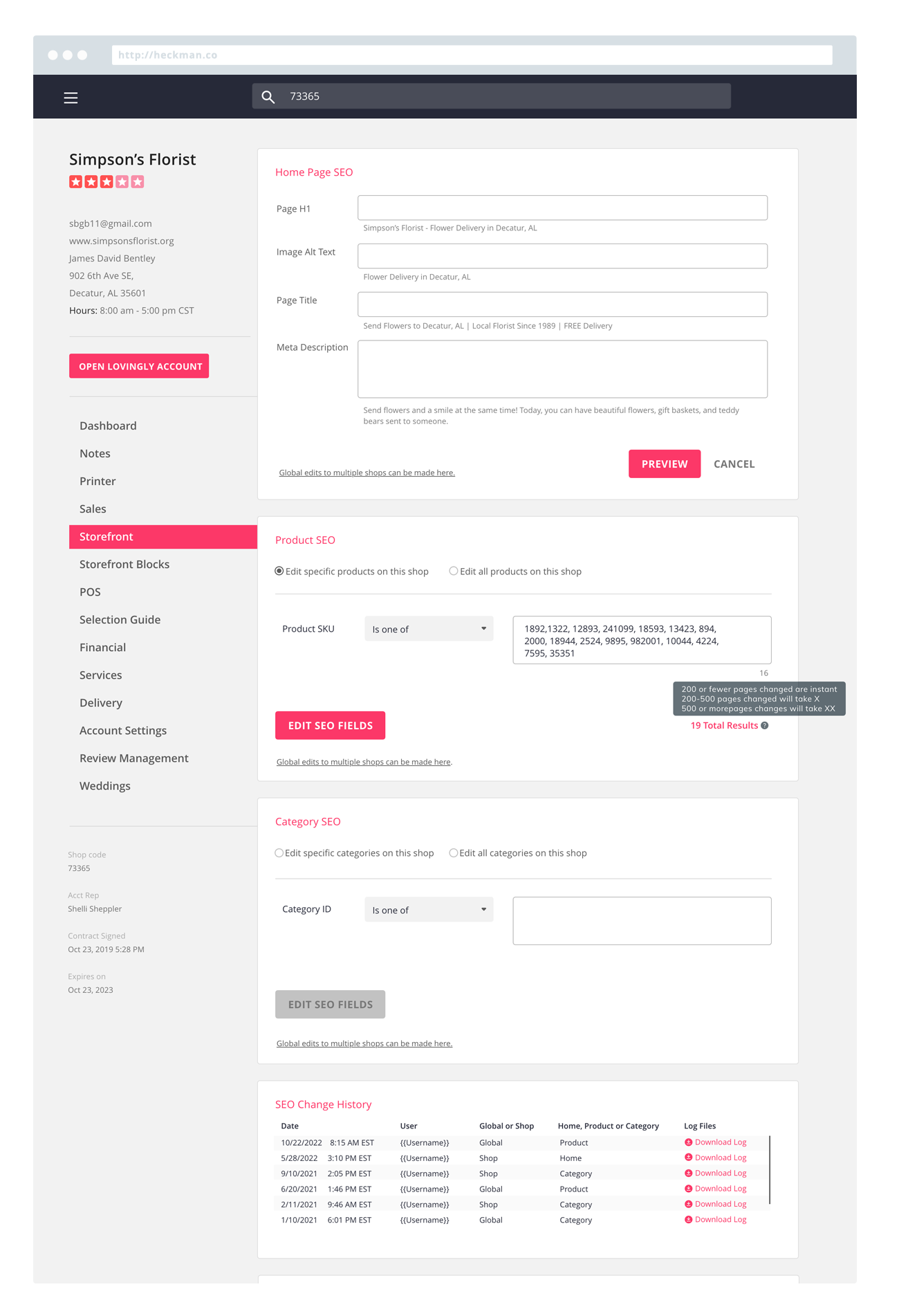
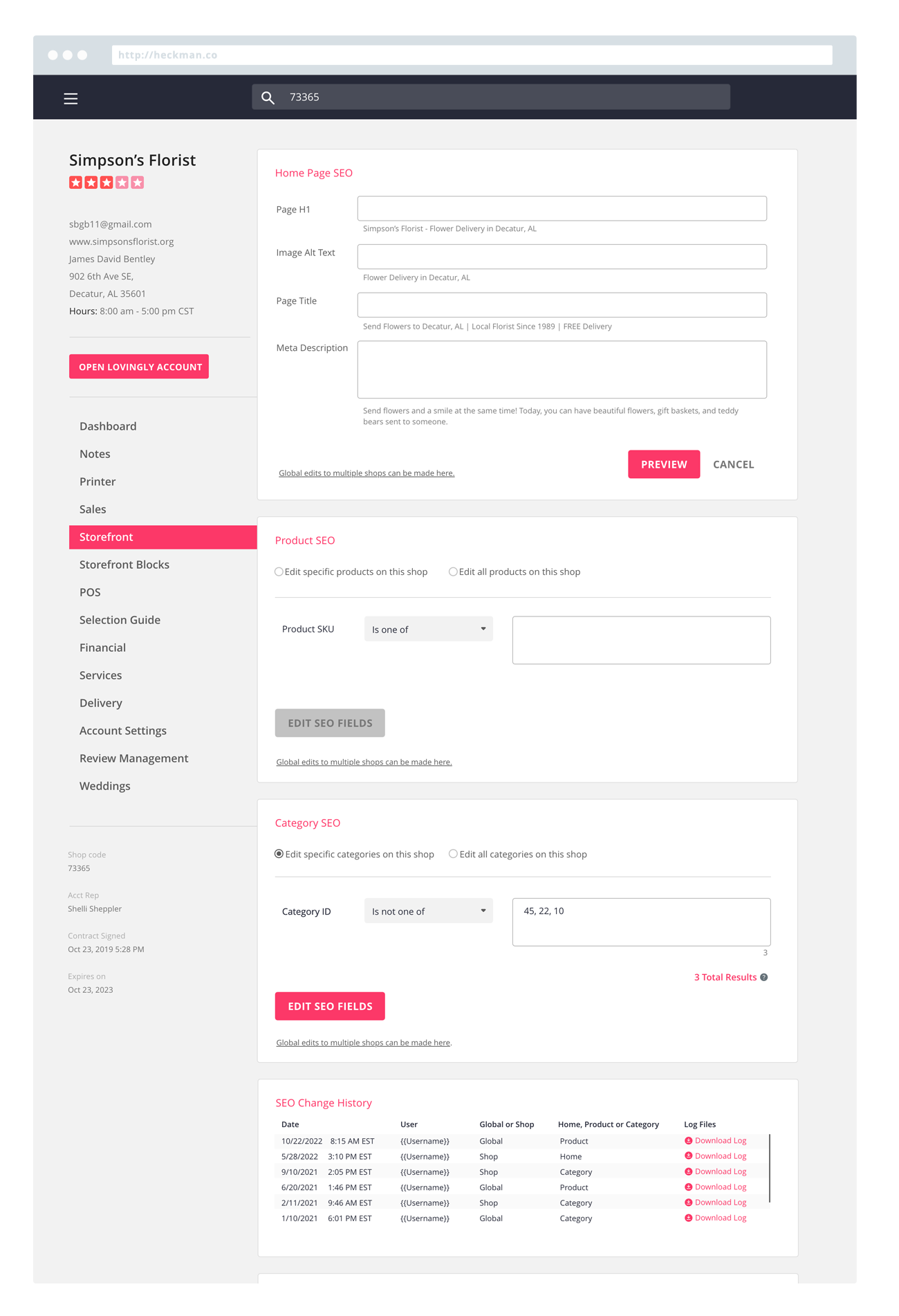
Working within the existing platform meant matching established patterns and extending the design system rather than starting fresh. I defined the information architecture and workflows for the new tool, then built wireframes that mapped out how editors would create, edit, and apply metadata across storefronts.
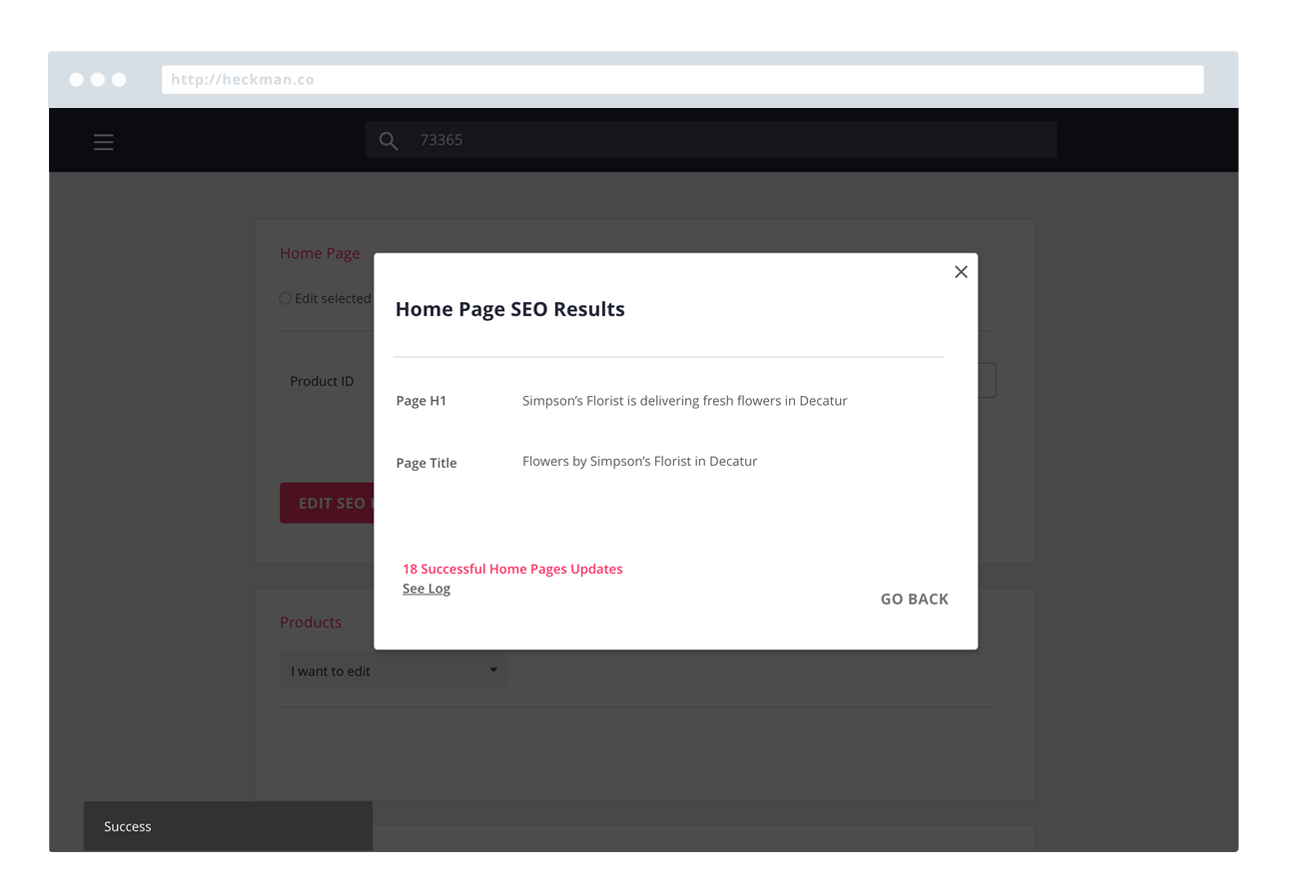
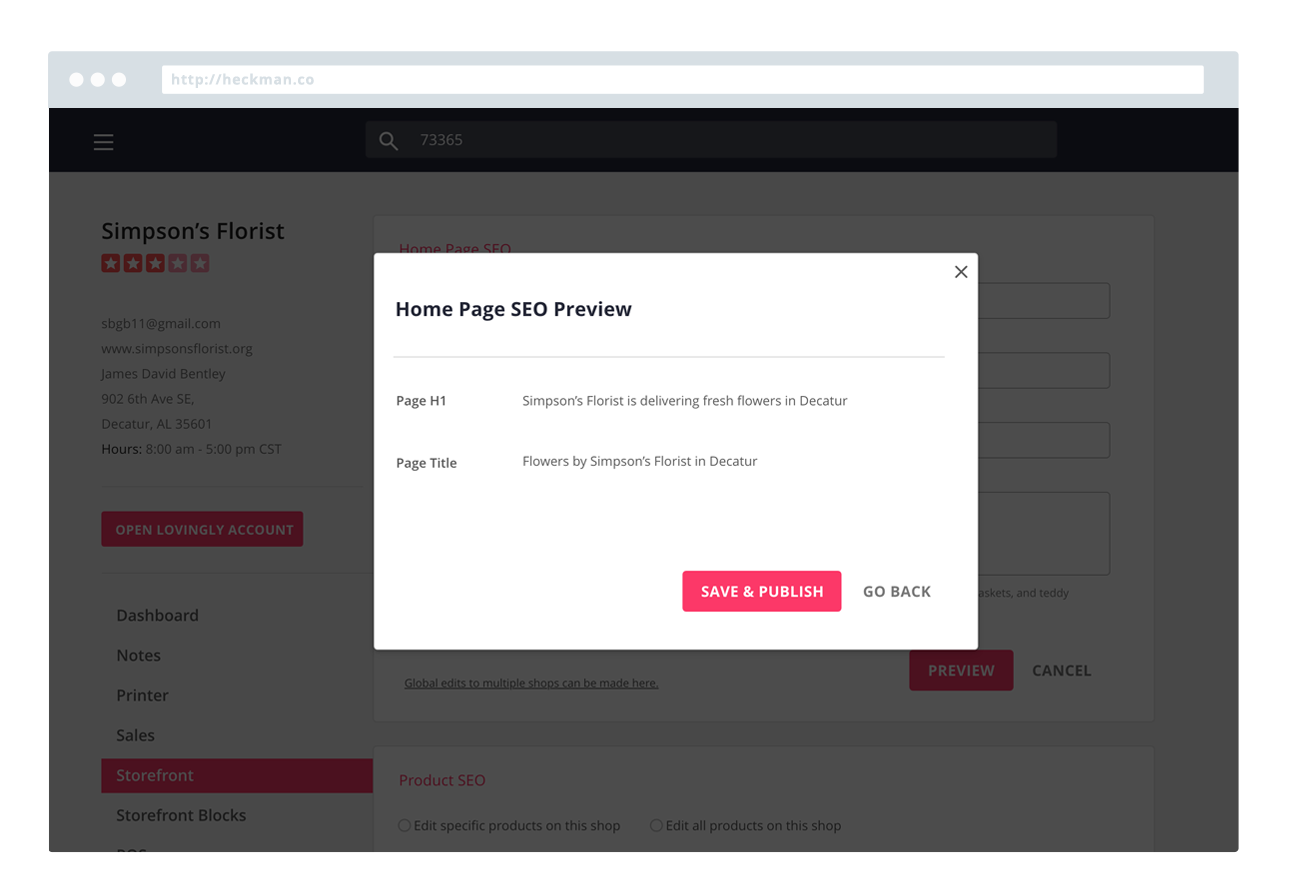
The design centered on structured editing fields, live feedback, and clear visual hierarchies. Editors could see exactly how their changes would appear before publishing, which reduced the risk of mistakes and made SEO concepts easier to understand for non-technical users. Every visual pattern mapped cleanly to the backend data structures being built in parallel.
Design System
Since the tool lived within an existing platform, consistency wasn’t optional. I extended the design system with new components for validation states, structured text fields, and bulk-edit interactions, documenting each addition with usage guidance so the patterns could be reused across future work. This project set a precedent for how new internal features would be added and documented going forward.
Collaboration
This project depended on close coordination across teams and a tight timeline. I worked with SEO specialists to define the data model, with engineers to validate system behavior, and with product managers to prioritize feature rollout. We kept communication open through design reviews, shared documentation, and regular walkthroughs. That collaboration kept the work moving and made sure the final product balanced technical accuracy with usability.
Outcome
The Internal SEO Management Tool introduced a capability the company had never had. For the first time, teams could create, edit, and publish SEO content directly within the platform without developer involvement. Hundreds of florist storefronts got unique, optimized metadata where none had existed before.
The tool shipped within the two-month window and became a model for how new internal product capabilities could be designed, documented, and delivered within an existing system.